
Therapy that meets your child in the rooms they already love.
In-home ABA therapy is where most Clementine families start. Sessions happen inside the environment your child already knows - kitchen, living room, bedroom, backyard - so the skills your team teaches are embedded directly into the routines you already run every day.
- Sessions in your home, on your schedule
- Live caregiver coaching every visit
- Siblings and routines part of the process
Skills that travel because they never had to.
Therapy in a clinic teaches your child to do something in a clinic. Therapy in your kitchen teaches your child to do that same thing where it actually has to happen - at breakfast, before school, during a transition. That difference compounds over months, and it’s why most Clementine families pick in-home as their starting point.
-
Familiar environment
Your child stays regulated from minute one.
No new lights, no new smells, no clinical waiting room. Your child's nervous system is already calm when their care team arrives - which is the prerequisite to learning anything new. Sessions can start with skill work, not with twenty minutes of acclimation.
-
Lessons live where life lives
Routines become the curriculum.
Asking for a cup, getting dressed, transitioning to bath time, putting on shoes - these are not separate teaching moments. They are the teaching moments. Your child practices skills exactly where they need them, with the people who are usually around when those moments happen.
-
Whole family included
Siblings and grandparents are part of the work.
Brothers, sisters, and any caregiving adult who is home during a session naturally become part of the daily flow. Your team coaches everyone in the household at once, instead of asking you to translate strategies from a clinic later that day.
-
Predictable rhythm
Same humans, same room, every week.
Your child sees the same Clementine team members in the same space on the same schedule. The predictability itself is therapeutic - and it makes data collection cleaner because the environment stays constant.

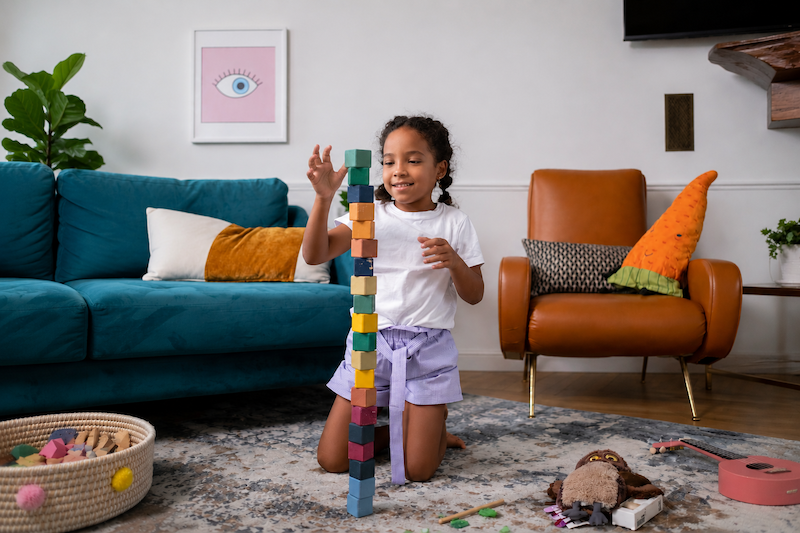
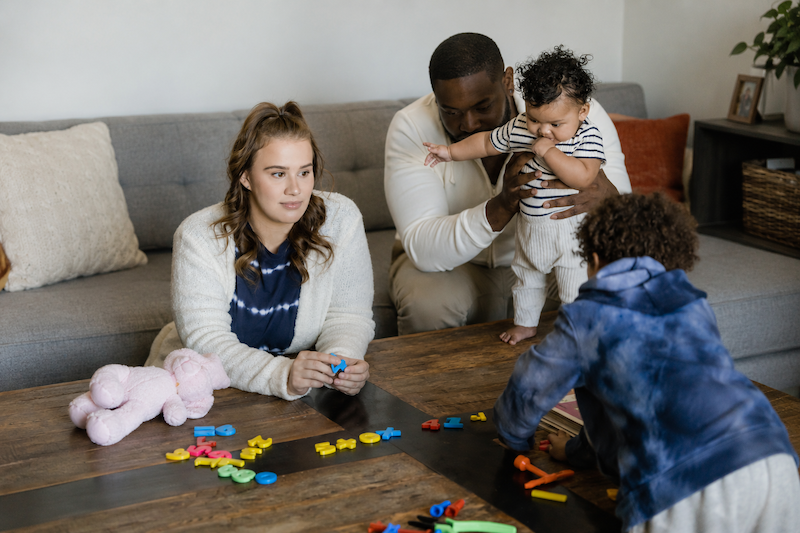

What an in-home session actually looks like.
A typical Clementine in-home session runs about two to three hours. It doesn’t feel like a classroom. It looks like guided, structured play with one of your child’s people - except that everything they’re doing is tied to a specific developmental goal.
-
Your team walks in the door
-
Goals embedded in play
-
A real teachable moment
-
Debrief and the week ahead
These are illustrative schedules. Your child's actual session times are set with your care team.
A short, honest list of what makes in-home sessions work.
In-home ABA is designed to fit inside your household, not to take it over. Here is exactly what we need from you to make sessions work - and what we bring ourselves.
-
Space
A consistent room
A small dedicated area where sessions can happen consistently - a corner of the living room, a play area, the kitchen table. Size matters much less than consistency.
-
Supervision
An adult at home
A parent, grandparent, or other caregiving adult should be present in the home during sessions. You don't need to be in the room - but you should be reachable and joinable.
-
Materials
Your child's favorite things
Toys, snacks, books, and activities your child actually enjoys. We'll use these as natural reinforcers. We bring our own materials too, but yours are what your child is most motivated by.
-
Mindset
Realistic openness
Laundry baskets, dirty dishes, sibling noise, dogs barking, doorbells - these are not problems. They are the environment your child needs to function in, and your team will work with all of it.
We accept many insurance plans.
Insurance is our job, not yours - our team can help get you started.





Considering in-home therapy? Here's the rest of the path.
Bringing therapy into your home is just the first decision. The next steps are short and predictable - most families move from an introductory call to a steady in-home schedule in about a month, and we carry the paperwork the whole way.
-
A first conversation
Tell us about your child, what a hard day looks like, and where you'd most like help. It's a real conversation - no intake script, no pressure to sign anything.
-
We verify your coverage
Our team checks your benefits and files the prior authorization for you, then comes back with a straight answer on what your plan covers. The insurance legwork is ours, not yours.
-
An individualized assessment
A Clementine clinician watches how your child plays, communicates, and learns, then writes a treatment plan around goals that actually matter to your family.
-
We set up sessions in your home
We map sessions around your home's routines and your family's week - and if home and another setting work better as a mix, we'll plan that together. You never have to sort this out alone.
-
Sessions begin
Your named care team starts on a consistent schedule, right inside your home, ready to get to work from the very first day.
Caregiver Coaching
We teach you the same strategies your team uses, so progress doesn't stop when a session ends - it carries into mealtimes, bedtimes, and everything between.
School Coordination
Your team stays in step with teachers and aides so the approach is consistent across your child's day - even when therapy happens somewhere else.
Monthly Progress Reviews
Every session adds data; every month you sit down with your team to review the progress together and decide what comes next.
Roughly four weeks from that first call to therapy - you focus on your child while we handle the rest.
Questions families ask about in-home therapy.
The most common questions we hear from families considering in-home ABA. Still have one we missed? The team is one call away.
Logistics
-
What room in our house do you need?
Whatever room works for your family. Most sessions happen in a living room, family room, or your child’s bedroom or play area. The space needs to be quiet enough to focus and large enough for your child plus one clinician to move around. We are equally comfortable on the floor with blocks as we are at a kitchen table.
-
Do I have to be home for every session?
A caregiving adult - parent, grandparent - should be in the home for every session. You don’t need to be in the room the entire time. Most families do other things during part of the session and join for short coaching moments.
-
What if our home is messy?
Bring it on. Real life is the curriculum for in-home ABA. Toys on the floor, dishes in the sink, laundry on the couch - your team is not judging. We are looking at the actual environment your child has to function in, because that is the environment where skills need to work.
-
How long are sessions?
A typical session runs about two to three hours. Your child’s age, attention span, and goals shape the exact length - younger children or new families often start with shorter sessions and build up. Most families schedule sessions multiple times per week at consistent times.
Family involvement
-
How involved do I need to be?
As involved as you can be - that is the honest answer. The Clementine families who see the biggest changes are the ones where caregivers are actively learning the strategies. That said, “involved” does not mean “in the room the whole time.” It means being open to short coaching moments, trying strategies in real life between sessions, and asking questions when something is not working.
-
What about my other kids?
Siblings are an asset, not a distraction. We routinely involve brothers and sisters in sessions where it helps - turn-taking, social repair, joint play. If sibling presence is overwhelming, your team will work with you on session timing.
-
What if I have a nanny or grandparent doing the routines?
Loop them in. With your consent, the strategies your team uses should run with whoever is the primary caregiver in any given moment. We are happy to coach grandparents, nannies, or other caregiving adults the same way we coach parents.
Scheduling
-
Can we change our session schedule?
Yes. Life with children is not predictable. We work with families on consistent weekly schedules but accommodate seasonal changes, vacations, illness, and family events. Reach out to your care coordinator with any change - the earlier the better - and we will adjust.
-
What if we move during therapy?
If you’re moving within our service area, sessions continue uninterrupted at the new address. If you’re moving out of our service area, we work with you to find an ABA provider near your new home and coordinate the handoff.
-
Can we switch to center-based later?
Yes - and many families do. Once your child has built skills at home, moving some hours into a Clementine center adds peer interaction, structured drop-off practice, and prep for school environments.
Have a question we did not answer?
A short phone call with our intake team will get you a real answer from a real person. No clipboard, no sales pitch.